


종합검진 꼼꼼하게 확인해 보시고 검사 받으세요! 방치하지 마시고 정동병원으로!
- 작성일
- 2023-07-12
- 첨부파일
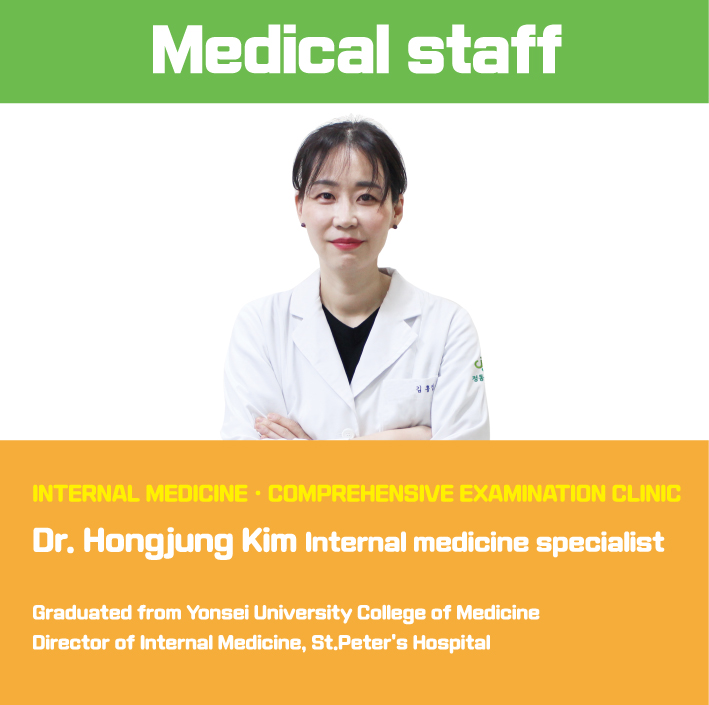
INTERNAL MEDICINE · COMPREHENSIVE EXAMINATION CLINIC
Dr. Hongjung Kim Internal medicine specialist
- Graduated from Yonsei University College of Medicine
- Director of Internal Medicine, St.Peter's Hospital
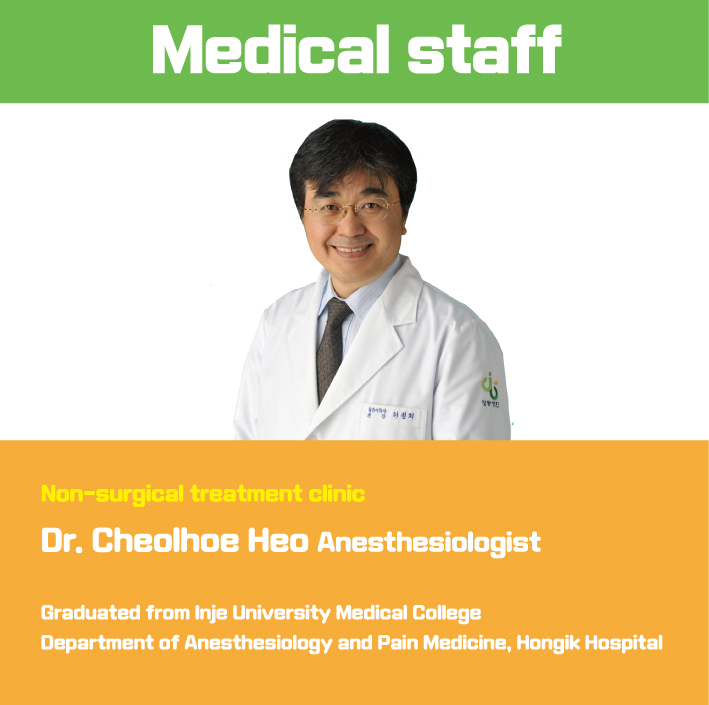
Non-surgical treatment clinic
Dr. Cheolhoe Heo Anesthesiologist
- Graduated from Inje University Medical College
- Department of Anesthesiology and Pain Medicine, Hongik Hospital
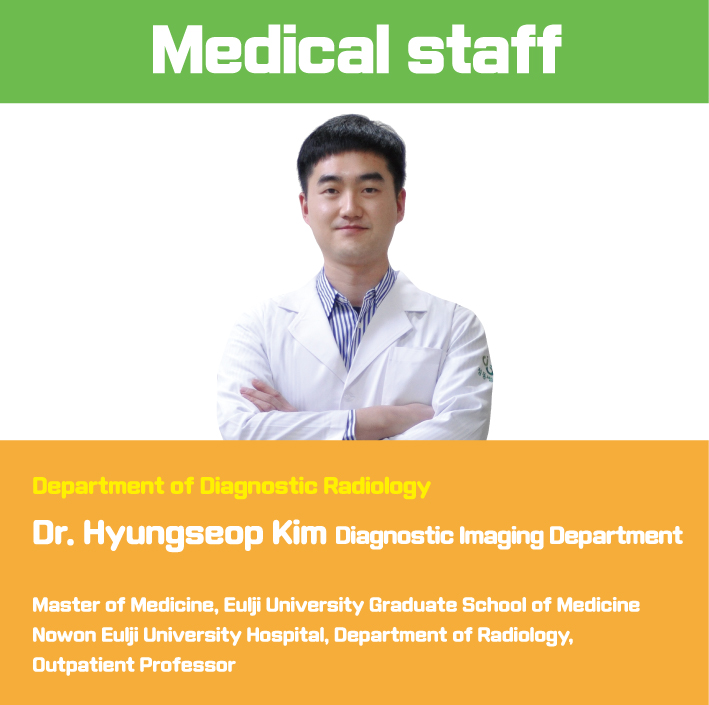
Department of Diagnostic Radiology
Dr. Hyungseop Kim Diagnostic Imaging Department
- Master of Medicine, Eulji University Graduate School of Medicine
- Nowon Eulji University Hospital, Department of Radiology, Outpatient Professor
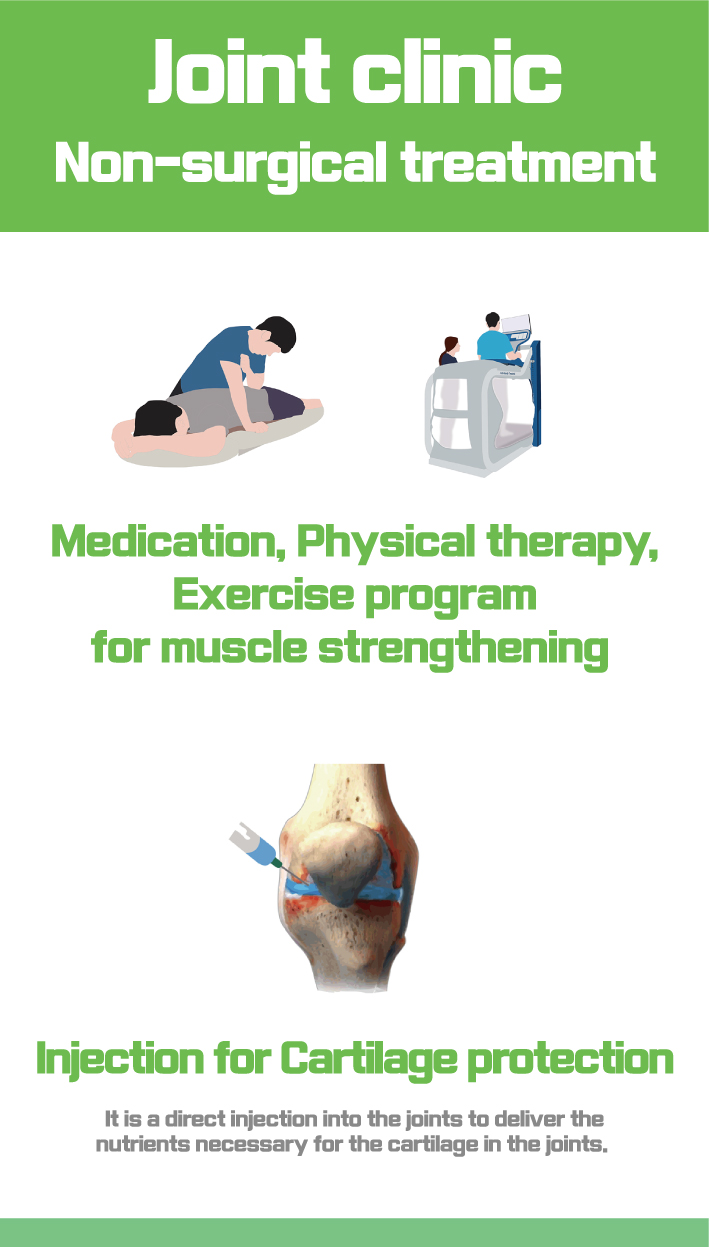
Joint clinic Non-surgical treatment
Medication, Physical therapy, Exercise program for muscle strengthe
Injection for Cartilage protection
It is a direct injection into the joints to deliver the nutrients necessary for the cartilage in the joints.
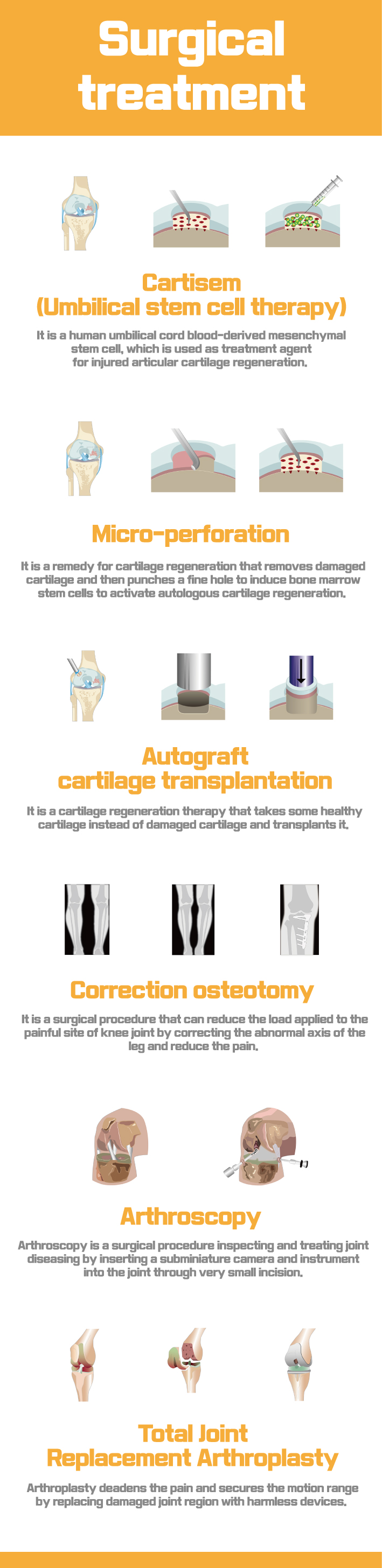
Surgical treatment
Cartisem (Umbilical stem cell therapy)
It is a human umbilical cord blood-derived mesenchymal stem cell, which is used as treatment
agent for injured articular cartilage regeneration.
Micro-perforation
It is a remedy for cartilage regeneration that removes damaged cartilage and then punches a fine hole
to induce bone marrow stem cells to activate autologous cartilage regeneration.
Autograft cartilage transplantation
It is a cartilage regeneration therapy that takes some healthy cartilage instead
of damaged cartilage and transplants it.
Correction osteotomy
It is a surgical procedure that can reduce the load applied to the painful site of
knee joint by correcting the abnormal axis of the leg and reduce the pain.
Arthroscopy
Arthroscopy is a surgical procedure inspecting and treating joint diseasing by inserting
a subminiature camera and instrument into the joint through very small incision.
Total Joint Replacement Arthroplasty
Arthroplasty deadens the pain and secures the motion range by replacing damaged
joint region with harmless devices.
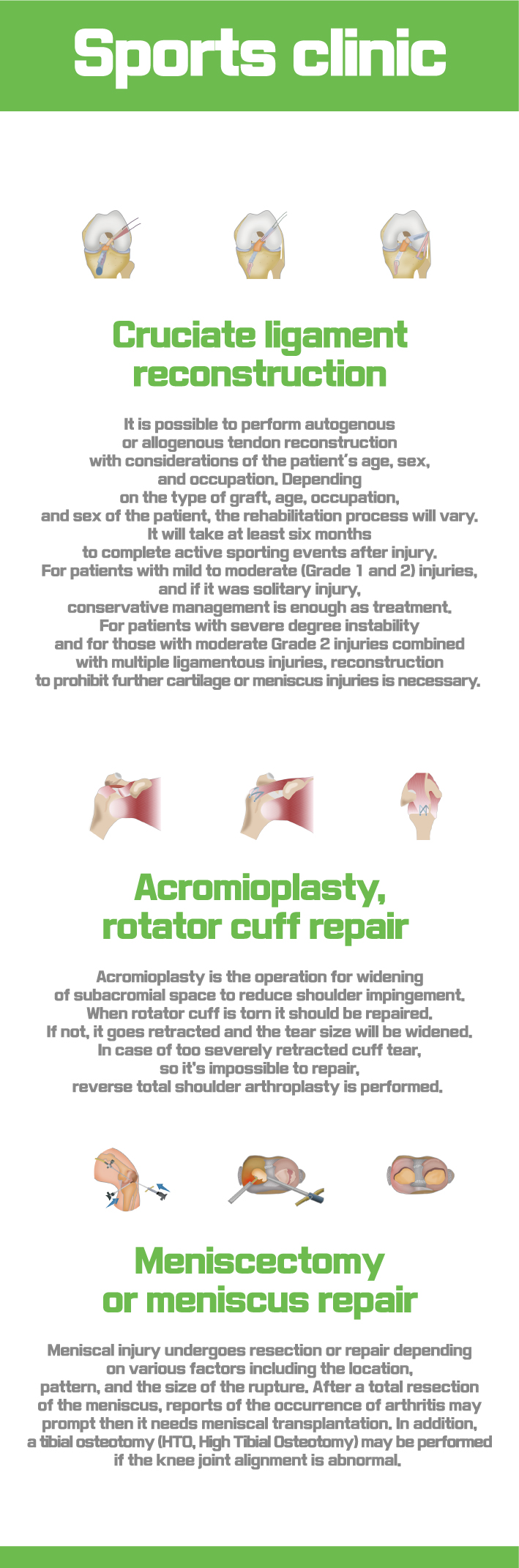
Sports clinic
Cruciate ligament reconstruction
It is possible to perform autogenous or allogenous tendon reconstruction with considerations
of the patient's age, sex, and occupation. Depending on the type of graft, age, occupation,
and sex of the patient, the rehabilitation process will vary.
It will take at least six months to complete active sporting events after injury.
For patients with mild to moderate (Grade 1 and 2) injuries, and if it was solitary injury,
conservative management is enough as treatment. For patients with severe degree instability
and for those with moderate Grade 2 injuries combined with multiple ligamentous injuries,
reconstruction to prohibit further cartilage or meniscus injuries is necessary.
Acromioplasty, rotator cuff repair
Acromioplasty is the operation for widening of subacromial space to reduce shoulder impingement.
When rotator cuff is torn it should be repaired. If not, it goes retracted and the tear size will be widened.
In case of too severely retracted cuff tear, so it’s impossible to repair,
reverse total shoulder arthroplasty is performed.
Meniscectomy or meniscus repair
Meniscal injury undergoes resection or repair depending on various factors including the location,
pattern, and the size of the rupture. After a total resection of the meniscus,
reports of the occurrence of arthritis may prompt then it needs meniscal transplantation. In addition,
a tibial osteotomy (HTO, High Tibial Osteotomy) may be performed if the knee joint alignment is abnormal.

Non-surgical treatment
Trigger point injection
TPI Injection therapy is a typical non-surgical treatment to relieve pain by lowering the inflammation level.
Prolo-therapy
If muscle, tendon, ligament, cartilage, or tissues around bones and joints are weakened and the functions
are damaged, prolo-therapy strengthens and regenerates according tissues by inducing cell proliferation.
Endoscopic Laser Neuro-Adhesive Peeling
After inserting a tube with a camera with a diameter
of 1 cm or less, proceed the approach while watching the screen.
Neuroplasty (Racz, Navi)
Neuroplasty is a procedure that injects medication into inflammatory focus by inserting special
subminiature catheter (a thin tube) after local anesthesia on coccyx.
High-frequency nucleoplasty
It is the treatment used to recover the deformed disk by applying
the high frequency thermal energy on the problematic disc.
DNA injection
It is a treatment that promotes DNA synthesis using components extracted from salmon.
Caudal endoscopy laser neuroadhesive ablatio
It is a treatment that removes the lesion through a laser by confirming the direct disk and performing the epidural neuroplasty after inserting a laser and an ultra-small endoscope camera of 1mm in diameter.
Neuroprotection
It is a treatment that uses long needles to spread the medications around painful nerves.
Epiduro Neucleoplasty
It is a minimally invasive procedure that injects medication into the site of lesion.
It is operated by inserting small catheter with 2mm in diameter and 40-50cm
in length through the coccygeal hiatus under C-arm guide. This catheter is placed at the
lesion site and it releases adhesion, removes inflammation, and reduces edema that makes pain.
Spine endoscopy
It is method that removes nucleus pulposus of protruded disc with microsurgical tools and high-frequency
tools through endoscope after inserting the endoscopic trocar inside of disc.
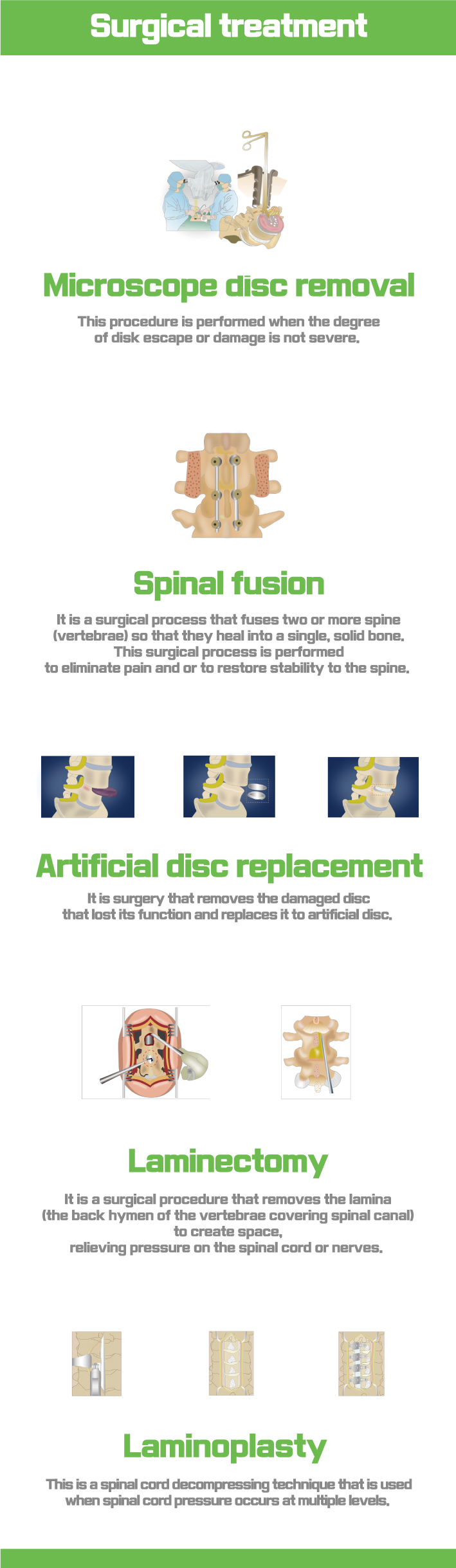
Surgical treatment
Microscope disc removal
This procedure is performed when the degree of disk escape or damage is not severe.
Spinal fusion
It is a surgical process that fuses two or more spine (vertebrae) so that they heal into a single, solid bone.
This surgical process is performed to eliminate pain and or to restore stability to the spine.
Artificial disc replacement
It is surgery that removes the damaged disc that lost its function and replaces it to artificial disc.
Laminectomy
It is a surgical procedure that removes the lamina (the back hymen of the vertebrae covering spinal canal)
to create space, relieving pressure on the spinal cord or nerves.
Laminoplasty
This is a spinal cord decompressing technique that is used when spinal cord pressure occurs at multiple levels.
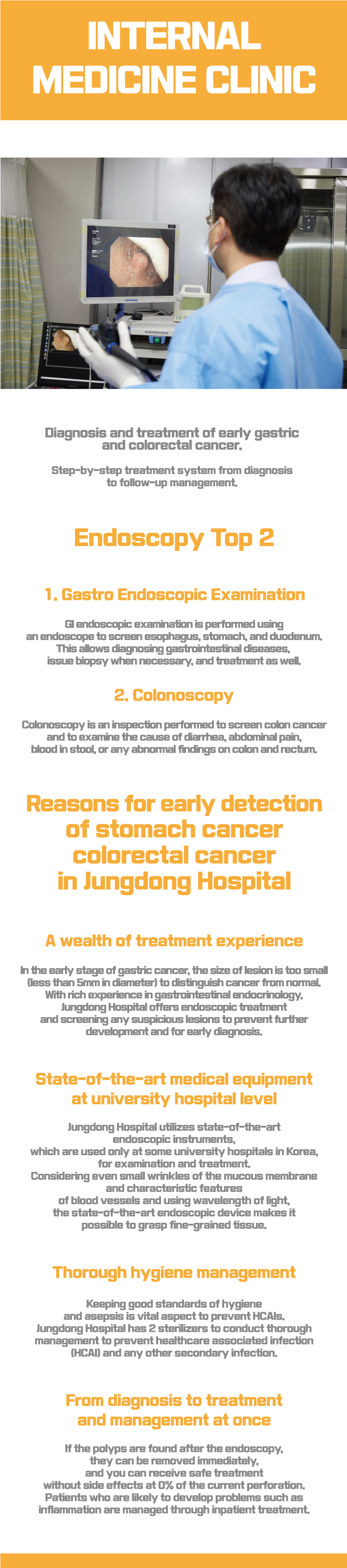
INTERNAL MEDICINE CLINIC
Diagnosis and treatment of early gastric and colorectal cancer.
Step-by-step treatment system from diagnosis to follow-up management.
Endoscopy Top 2
1. Gastro Endoscopic Examination
GI endoscopic examination is performed using an endoscope to screen esophagus, stomach, and duodenum.
This allows diagnosing gastrointestinal diseases, tissue biopsy when necessary, and treatment as well.
2. Colonoscopy
Colonoscopy is an inspection performed to screen colon cancer and to examine the cause of diarrhea, abdominal pain, blood in stool, or any abnormal findings on colon and rectum.
Reasons for early detection of stomach cancer colorectal cancer in Jungdong Hospital
A wealth of treatment experience
In the early stage of gastric cancer, the size of lesion is too small (less than 5mm in diameter) to distinguish cancer from normal. With rich experience in gastrointestinal endocrinology, Jungdong Hospital offers endoscopic treatment and screening any suspicious lesions to further development and for early diagnosis.
State-of-the-art medical equipment at university hospital level
Jungdong Hospital utilizes state-of-the-art endoscopic instruments, which are used only at some university hospitals in Korea, for examination and treatment. Considering even small wrinkles of the mucous membrane
and characteristic features of blood vessels and using wavelength of light, the state-of-the-art endoscopic
device makes it possible to grasp fine-grained tissue.
Thorough hygiene management
Keeping good standards of hygiene and asepsis is vital aspect to prevent HCAIs.
Jungdong Hospital has 2 sterilizers to conduct thorough management
to prevent healthcare associated infection (HCAI) and any other secondary infection.
From diagnosis to treatment and management at once
If the polyps are found after the endoscopy, they can be removed immediately, and you can
receive safe treatment without side effects at 0% of the current perforation. Patients who
are likely to develop problems such as inflammation are managed through inpatient treatment.


